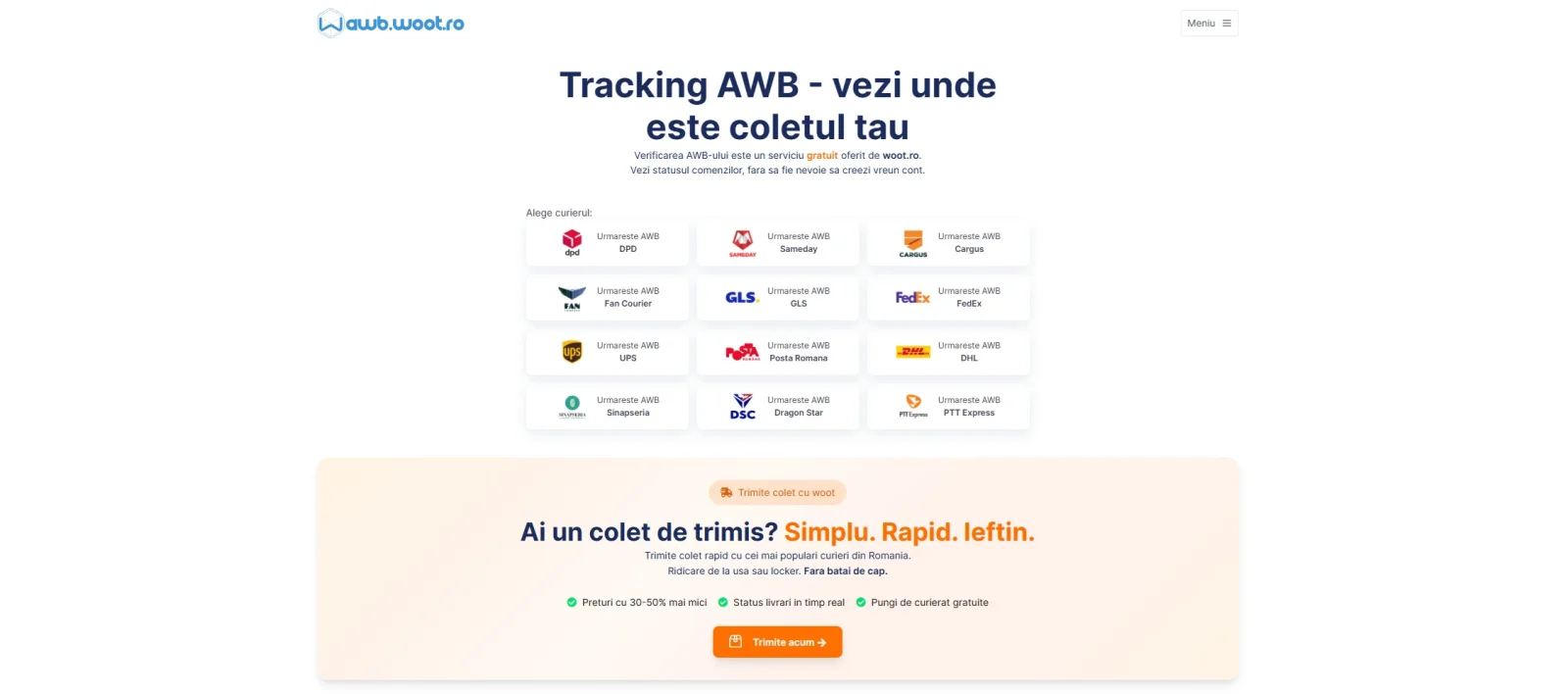
awb.woot.ro — Multi-Courier AWB Tracking Platform
Built a public multi-courier AWB tracking platform that normalizes shipment statuses across providers and presents them in a clean, SEO-friendly tracking experience.
awb.woot.ro is a public-facing shipment tracking platform designed to let users check AWB statuses across multiple couriers from a single interface.
The main challenge was not just calling courier APIs, but creating a consistent tracking experience across providers that return very different payloads, authentication flows, and status structures. Some couriers expose XML, others JSON; some use public endpoints, others require OAuth2 or custom authentication. The platform abstracts those differences into a unified flow.
Key parts of the work included:
Multi-courier tracking integrations
Integrated tracking flows for multiple courier providers using different API styles and response formats.
Built a factory-style resolution layer so each courier can implement a common tracking contract.
Status normalization
Grouped raw courier events into a smaller set of meaningful stages such as:
picked up by courier
in transit between hubs
out for destination / final transit
delivered
Preserved unknown statuses in the timeline without incorrectly activating the main visual stages.
Tracking-focused UI
Designed the front-end experience around a horizontal progress/status line and a clear vertical timeline below it.
Prioritized readability so users can quickly understand where the parcel is, instead of reading raw courier logs.
Recent searches / usability
Added local storage support for recent AWB lookups so users can easily revisit the last tracked shipments.
SEO-oriented rendering
Built the platform with SSR in mind to make public courier pages and tracking-related content more search-engine friendly.
Worked through non-trivial SSR issues involving Laravel & Inertia.js.
Integration reliability
Handled inconsistent courier data, XML parsing issues, authentication differences, and edge cases where public tracking responses vary by provider.
This project is a good example of turning fragmented external logistics data into a clean, understandable product experience